
Hotel Monasterio Cusco: A Former Monastery in Peru’s Imperial City
Hotel Monasterio, with its dark wood and Spanish colonial architecture, is a 16th-century former monastery constructed on the foundations of an Inca palace. Beyond the hotel walls, Cusco reveals layer upon layer of history, with ancient Inca stonework woven into the elaborate architecture of colonial Spain. It is a place where the city’s past is not confined to museums; it surrounds you at every turn.
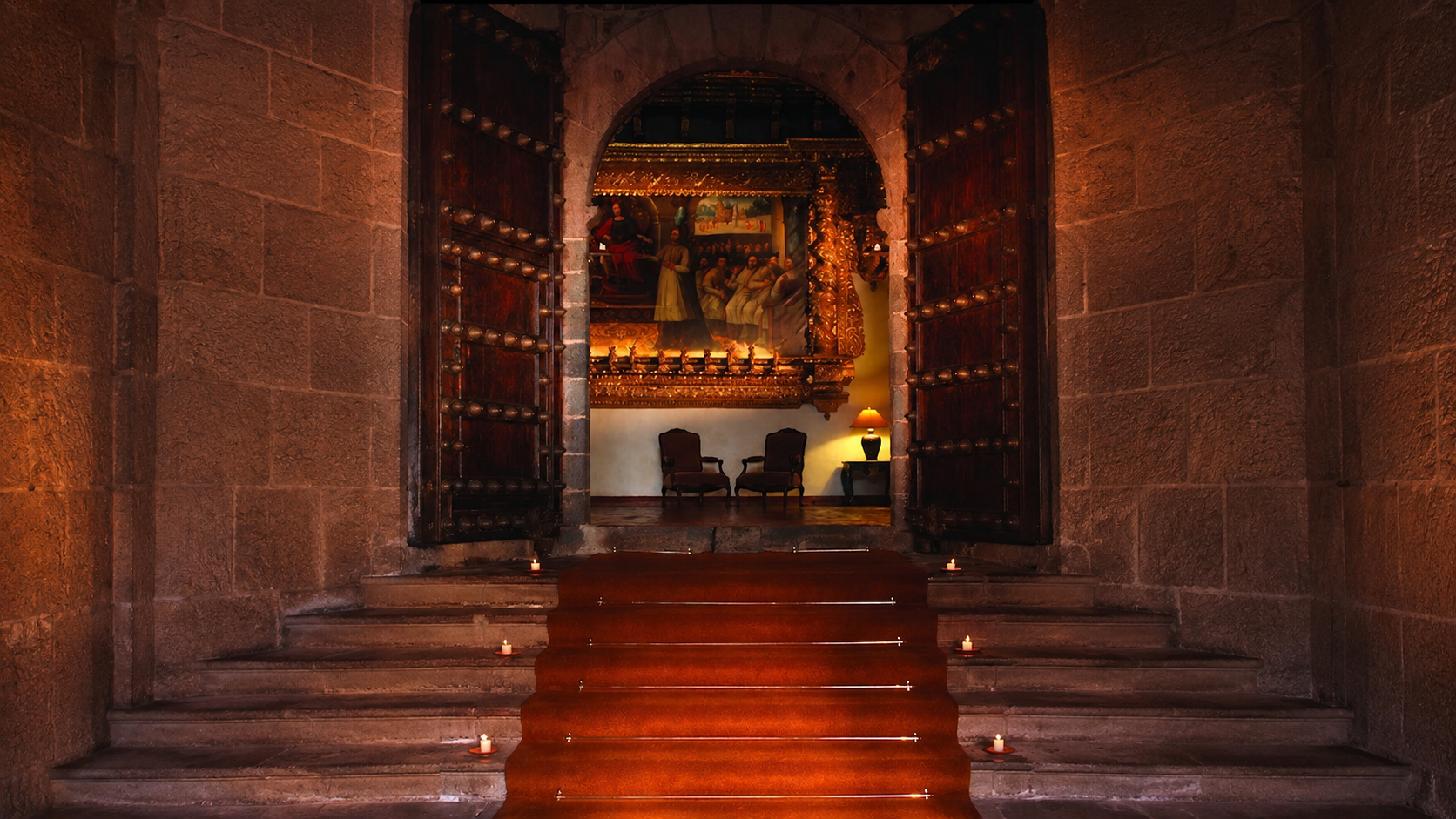
Candlelit staircase and carved wooden doors framing religious artwork at Hotel Monasterio in Cusco, Peru.
When I think of Cusco, I think of Hotel Monasterio. The building is not merely the setting; it is one of the central reasons the journey remains so vivid to me. Its cloistered courtyard, stone arches and sacred paintings create a warm, inviting atmosphere, while a quiet spiritual quality seems to soften the passage of time. During our visit, a diplomat’s wedding filled the hotel with formal dress, music and ceremony. The celebration appeared completely at home within the chapel and centuries-old architecture, as though the ceremonial grandeur of colonial Cusco had briefly returned.
The property was once the Seminary of San Antonio Abad, established in the late 16th century as a place of religious education and devotion. After the earthquake of 1650, the complex was rebuilt with its Baroque chapel, where gilded frames and religious paintings still preserve the character of its former life. Walking beneath the cloister arches, past the fountain and the magnificent 300-year-old cedar tree, I can imagine seminarians crossing the courtyard between lessons and prayer, or a bishop receiving visitors from the colonial city beyond the monastery walls.
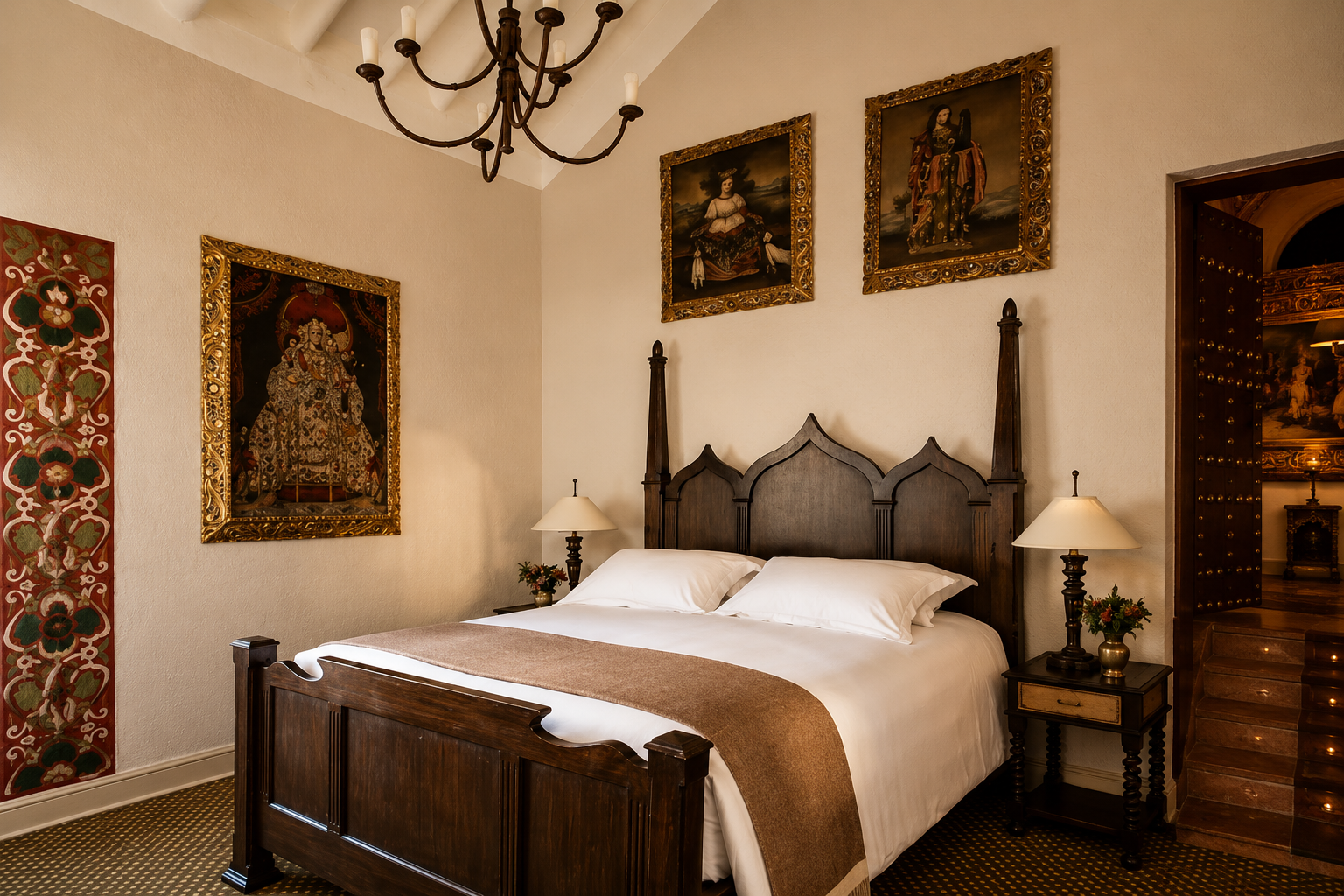
Inside Hotel Monasterio, the guest rooms blend monastic heritage with the warmth of a private retreat.
Some of my favorite memories are found in the smaller details. El Tupay carries the hotel’s sense of occasion into the evening, “with dinner served beneath vaulted stonework to the sound of live opera. I also loved the hotel’s gift shop, where glass cases displayed beautiful gold pieces and pendants inspired by pre-Columbian ceremonial art, including replicas of Chimú masks. They seemed less like ordinary souvenirs and more like fragments of Peru’s ancient visual language made wearable. Beyond the hotel, Cusco Cathedral and the streets surrounding the Plaza de Armas continue the conversation between Inca foundations, Spanish churches and generations of religious art.
There are hotels that provide a beautiful setting, and there are those that seem to exist beyond ordinary time. Hotel Monasterio belongs to the latter. Within its chapel, courtyards and centuries-old walls, you are surrounded by the spiritual and ceremonial history of Cusco. For a little while, the centuries seem to draw closer, and you become part of a place that is sacred, ethereal and enduring.
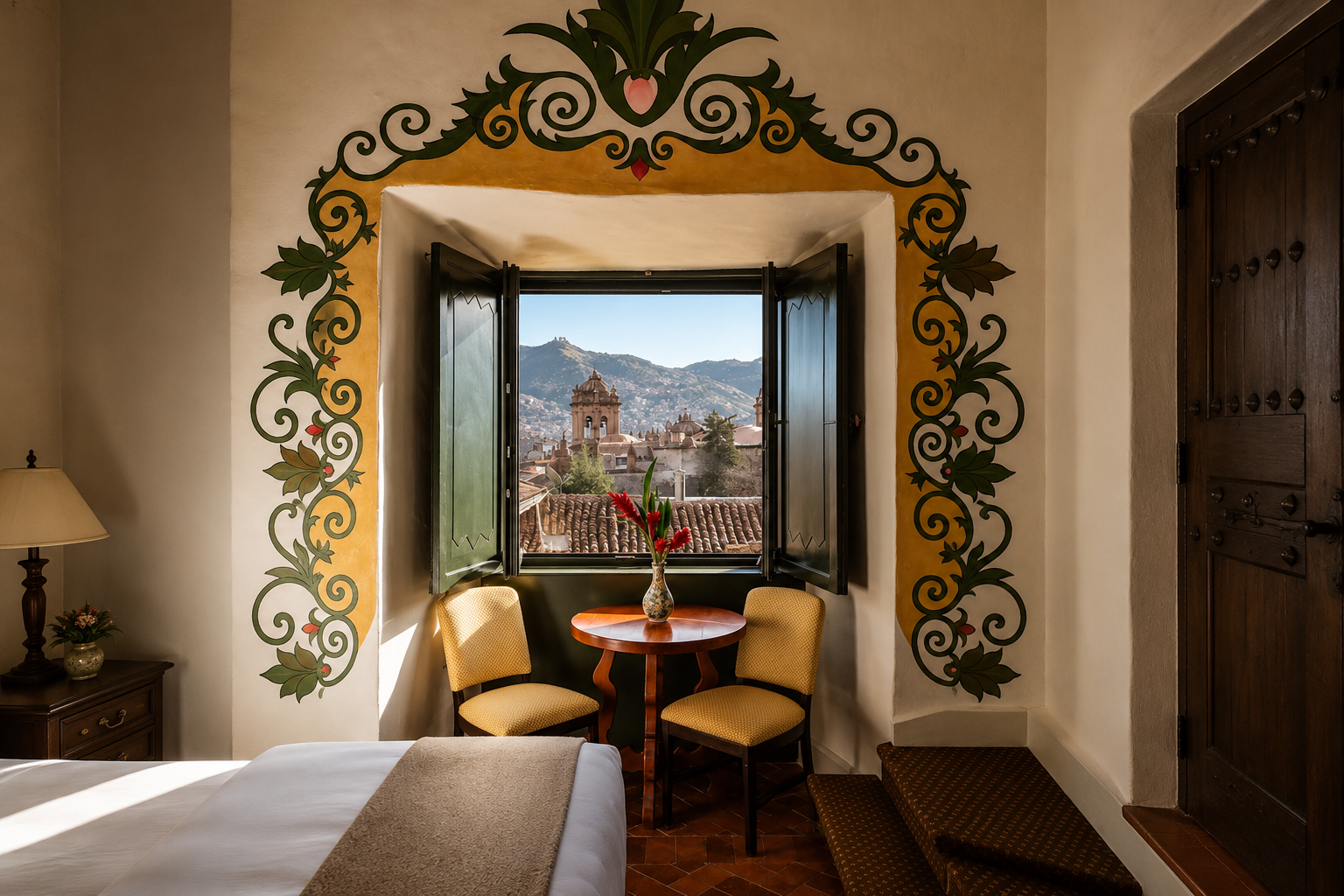
From the guest room, Cusco’s terracotta rooftops and surrounding hills unfold beyond the monastery walls.
Need to know
Cusco is often treated simply as the gateway to Machu Picchu, but allow at least two full days to experience the city and adjust to its elevation of approximately 3,400 meters. Keep your first day unhurried, hydrate and spend time walking through the historic center, where Inca stone foundations remain visible beneath Spanish colonial buildings. Visit Cusco Cathedral slowly, then explore the city’s galleries and workshops or ask the hotel about its Cusco School art experience for a deeper understanding of the religious paintings found throughout Monasterio. Before your stay, also check the El Tupay schedule and reserve dinner on an evening with live opera—one of the hotel’s most memorable traditions.
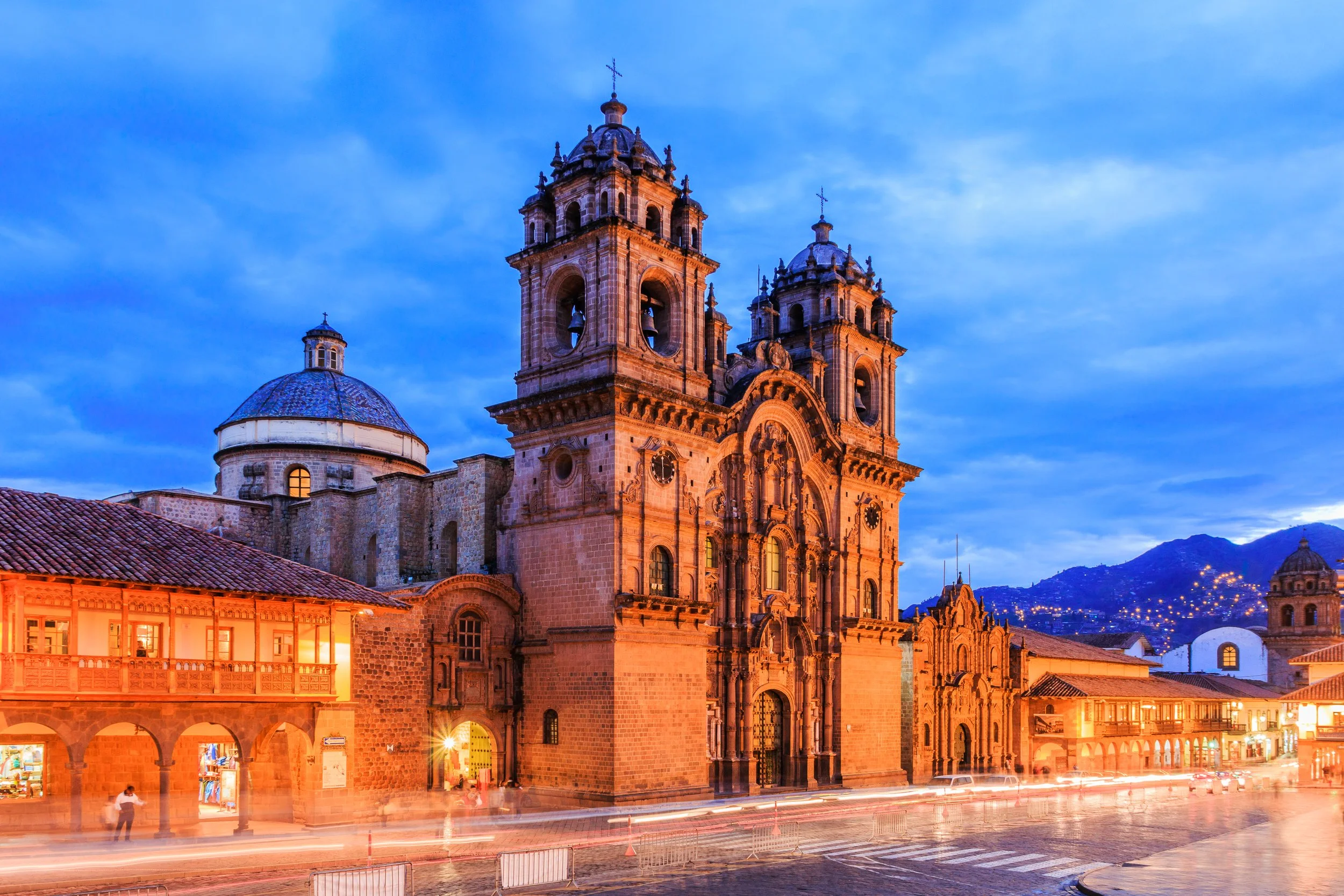
Cusco’s Plaza de Armas at dusk, where illuminated colonial architecture rises against the surrounding Andean hills.
How to plan your experience
Weather
Cusco’s drier season generally runs from May through November, bringing clearer days that are ideal for exploring the city and surrounding archaeological sites. Because of the elevation, mornings and evenings can still be cool, so pack layers, sun protection and comfortable shoes for the old stone streets.
Top Sites
Do not treat Cusco simply as the gateway to Machu Picchu. Allow at least two days for Cusco Cathedral, Qorikancha, Sacsayhuamán, the Twelve-Angled Stone and the artisan neighborhood of San Blas. Look closely as you walk: much of the city’s extraordinary character comes from Inca foundations and precisely cut stonework supporting the Spanish churches and residences built above them.
What to Know
Cusco sits approximately 3,400 meters above sea level, so keep your arrival day gentle and allow time to acclimatize before continuing to the Sacred Valley or Machu Picchu. Hotel Monasterio offers oxygen-enriched room categories, which are worth requesting in advance. Ask the concierge about opera evenings at El Tupay and any available Cusco School art experiences before finalizing your plans.
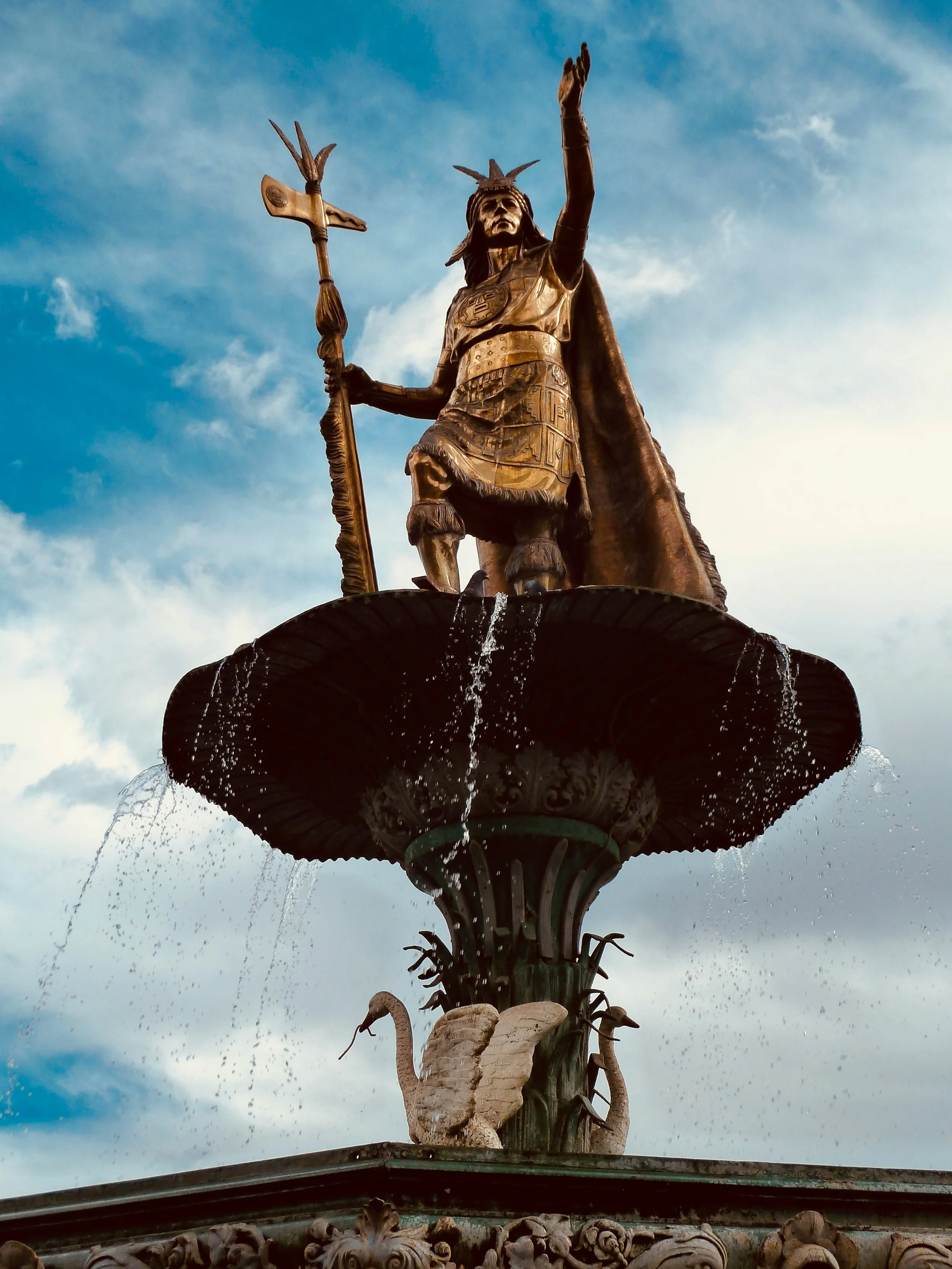
Cusco, Heart of the Inca Empire
Cusco asks you to look more closely—at the Inca stones beneath a Spanish façade, the Andean details hidden within a sacred painting, and the centuries of history held inside a former monastery. Stay long enough to hear the cathedral bells, wander through San Blas and watch the evening light settle over the terracotta rooftops. Hotel Monasterio allows you to enter that layered world rather than simply pass through it.
Stay within the story of Cusco. Book Hotel Monasterio →
Looking to explore beyond the hotel, from its cathedral and art traditions to the archaeological sites surrounding it?
Explore Tours and Experiences in Cusco →
Planning a more considered Peru journey through Cusco, the Sacred Valley and Machu Picchu? Inquire About Bespoke Peru Planning →