
Exploring the coast with a local guide who knows its surf breaks, vineyards, oyster villages and the rhythms of life between Bordeaux and the Atlantic.
There is another South of France. Not the Mediterranean coast of Cannes and Saint-Tropez, but the Atlantic: long stretches of sand, pine forests, enormous dunes and small towns shaped by surf culture. Bordeaux lies just inland, oyster farms line Arcachon Bay and farther south, France begins to take on its Basque character.
It is a coastline where a morning surf can lead to an afternoon in the Médoc, oysters beside Arcachon Bay or dinner beneath the pines.
Meet Aurelien: French-American surfer and local guide who splits his time between Paris and Lacanau, where the Atlantic, Bordeaux and surf culture converge. Born in New York to French parents, Aurelien grew up moving between the United States and France and now knows this stretch of the French Atlantic from both sides: as a surfer and as someone who introduces travelers to the food, wine, landscape and culture surrounding it. I spoke with him about how surfing became part of his life, what makes Southwest France different from other great surf destinations and how to build a journey that goes well beyond the beach.
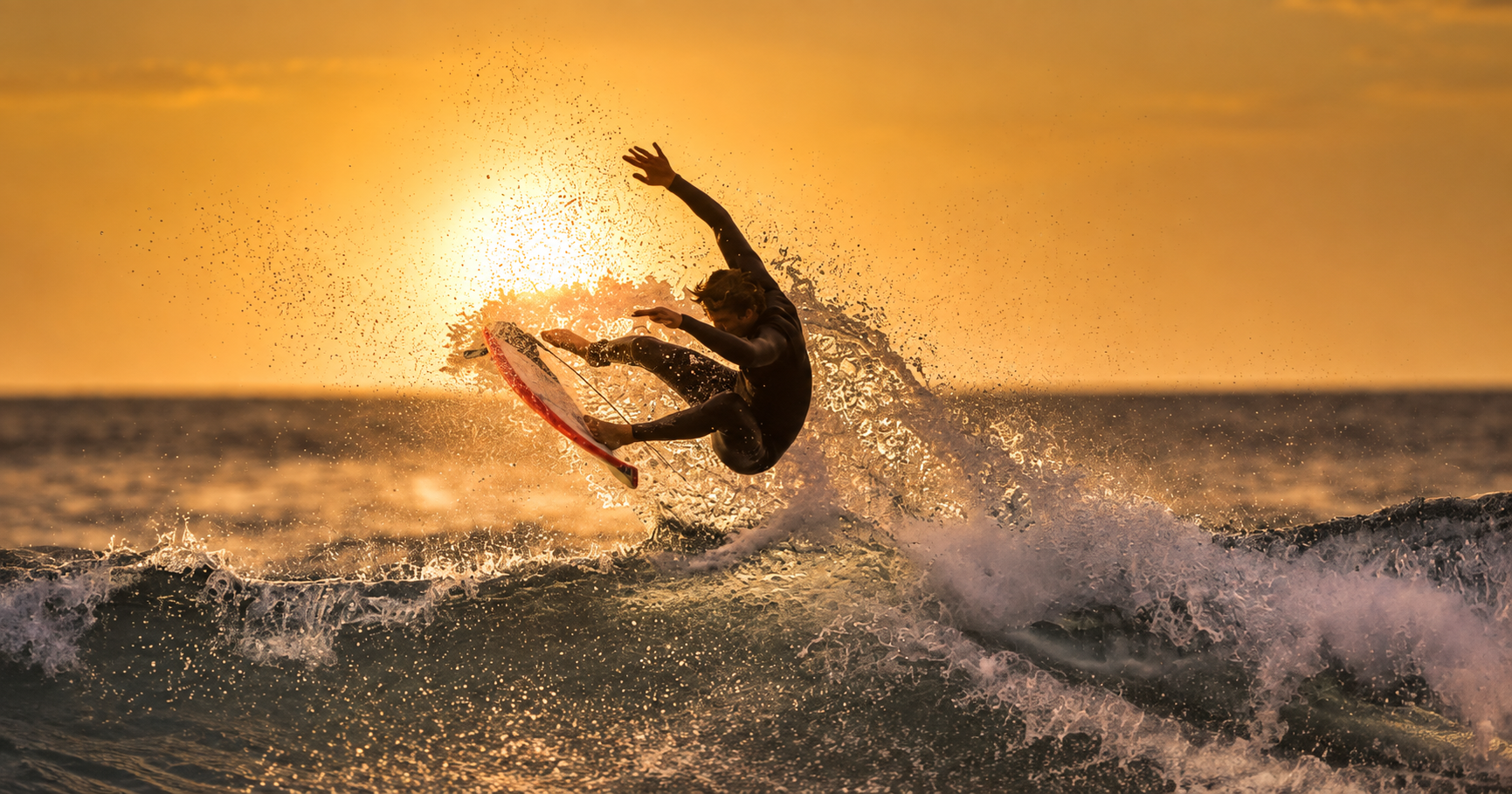
Lacanau Pro Surf Event, France | Photo: Alan Rogers
You grew up between France and the United States. How did surfing become part of your life?
I was born and raised in New York City to French parents, and our family vacations were split between Long Island or Cape Cod and Paris or the French West Coast. Surfing was around me from an early age, in the Hamptons, Montauk, Cape Cod and Biarritz, but I didn't really begin surfing seriously until I was about 28.
I was living in Paris and had started dating a Portuguese girl. From that point on, every long weekend and vacation seemed to revolve around surfing, whether in Portugal, on road trips along the French Atlantic coast or, eventually, farther afield. Surfing became a real counterbalance to an intense urban lifestyle. It is meditative and humbling, but physically demanding at the same time. Through surfing I found a different kind of travel, one centered on nature, challenge, simplicity and camaraderie.
You divide your time between Paris and Lacanau. What makes Lacanau special?
Lacanau is a small coastal surf town about an hour from Bordeaux. The landscape reminds me a little of Cape Cod. You have dunes, protected coastline and pine forest rather than continuous development. But what makes it especially interesting is everything surrounding it. Bordeaux's vineyards are nearby. Arcachon Bay and Cap Ferret have their oyster farms. The sunsets are spectacular. You are on the Atlantic, but still completely immersed in French food, wine and culture. It is very easy to move between those worlds.
France isn't necessarily the first place Americans associate with surfing. How deep does the surf culture go?
Surfing arrived in France in the mid-1950s, with Biarritz generally credited as its birthplace in the country. From there, surfers began exploring the Atlantic coast, and places like Lacanau developed their own surf communities around these long stretches of beach break. The Lacanau Pro began in 1979 and became France's oldest professional surf competition. More than four decades later, it remains one of the historic events on the European surf calendar. Today, towns like Lacanau, Hossegor and Biarritz have very established surf cultures, with schools, shapers, competitions and generations of surfers. This isn't a new scene. Surfing has been part of life on this coast for decades.
What makes the French Atlantic different from places like California, Hawaii or Portugal?
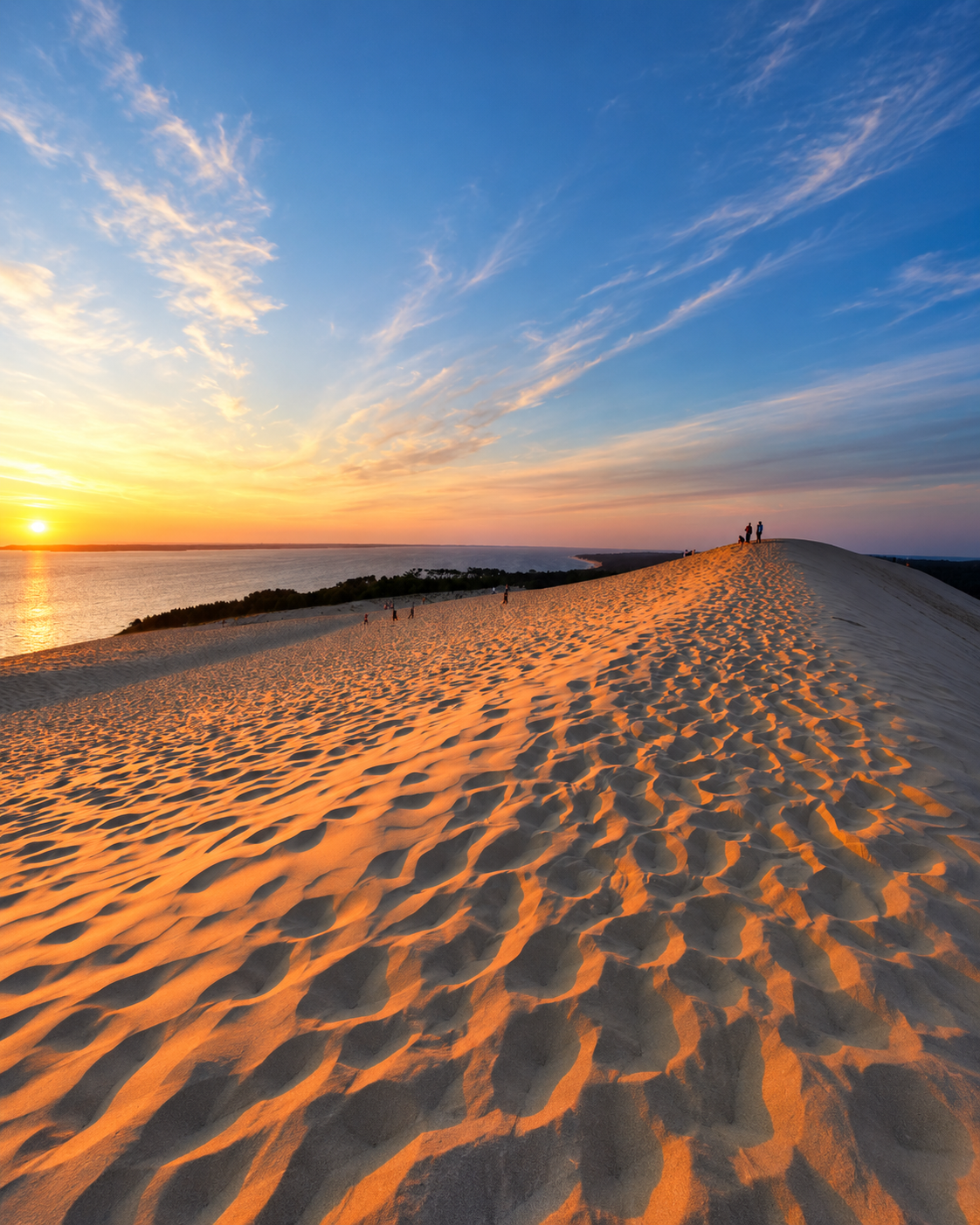
One of the major differences is the landscape. There are hundreds of miles of sandy beach breaks, with pine forest and protected coastline behind much of it. Small towns are separated by long stretches of nature rather than continuous urban development. Then you have places like the Dune du Pilat, Europe's largest sand dune. But for me, what really distinguishes Southwest France is what surrounds the surfing. You can surf in the morning and be in Bordeaux wine country that afternoon. You can have oysters beside Arcachon Bay, explore Basque food and architecture farther south or end the day in a small French coastal town. The surf is part of a much larger cultural experience.
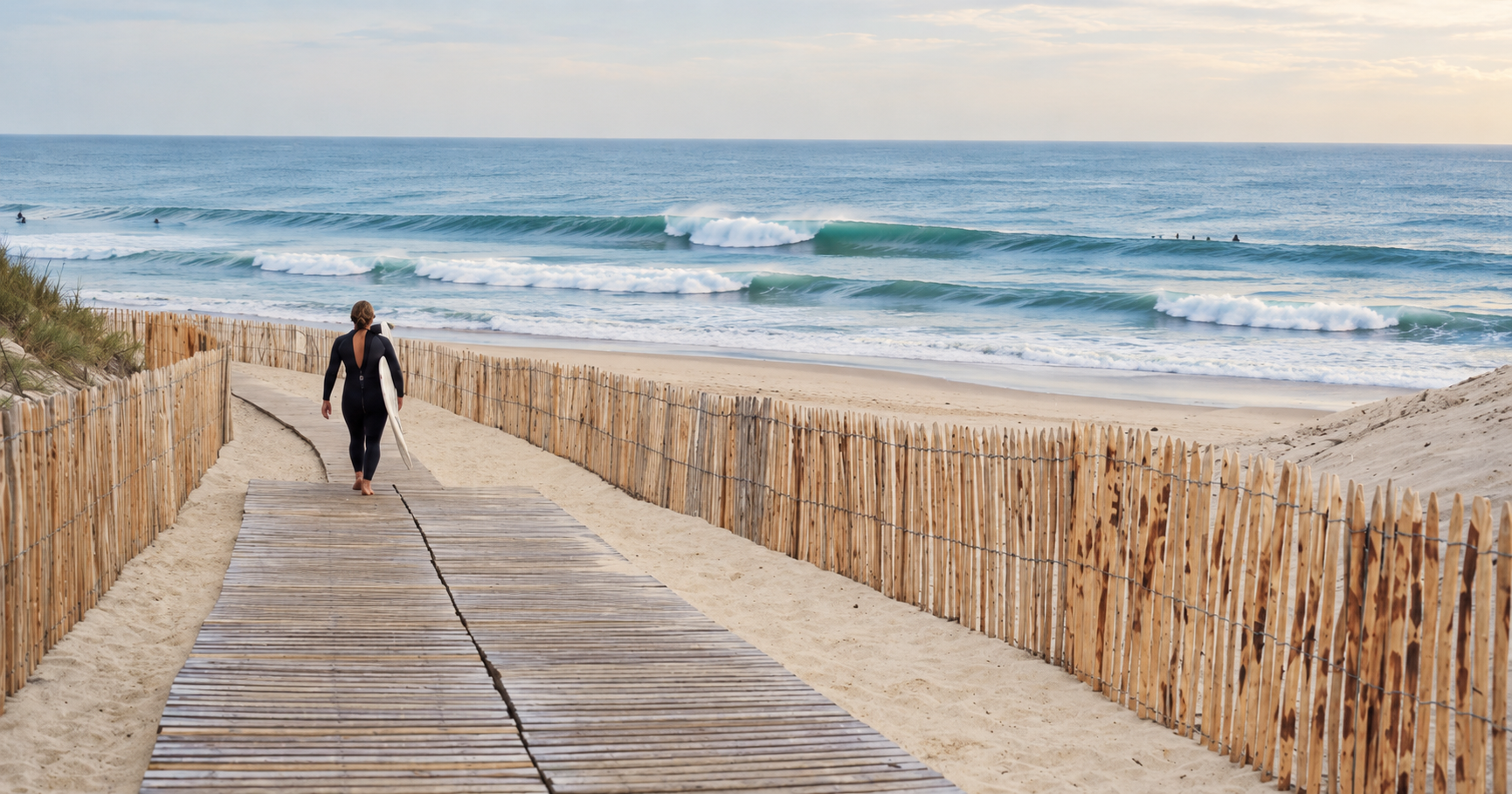
Dune du Pilat Boardwalk, France | Atlantic Coast near Arcachon Bay
When is the best time to come?
It really depends on your level. July and August generally bring smaller, calmer waves and are better suited to beginners. From November through March, the Atlantic can produce much larger and more powerful swells, so that period is better suited to experienced surfers. For many travelers, I particularly like the shoulder seasons: May and June or September and October. You tend to have more consistent waves than in midsummer, fewer crowds and very good conditions for exploring everything else the region has to offer.
What if only one person in a couple or family surfs?
Southwest France is actually ideal for that. There is so much to do close to the coast that the entire trip never has to revolve around surfing. While one person is in the water, another might visit a Médoc château, explore Bordeaux or Saint-Émilion, book a thalassotherapy treatment or cycle through the pine forest. There are oyster farms around Arcachon Bay, sailing and paddleboarding on the lakes, golf, local markets, the Dune du Pilat and, farther south, the Basque Country and San Sebastián. Most importantly, the day doesn't have to be completely divided. One person might surf early in the morning and then you spend the rest of the day together.
Surfing and Bordeaux wine aren't an obvious pairing. How would you combine them?
They actually work incredibly well together. Lacanau is roughly 55 minutes from Margaux, so you can stay in one place rather than changing hotels every night. The morning can be about the ocean, when the wind and light may be at their best, and the afternoon can be spent along the Médoc wine route. You might surf at dawn, have lunch among the vineyards, visit two châteaux and still be back at the Atlantic for sunset. You don't have to choose between a surf trip and a wine trip. They can be the same journey.
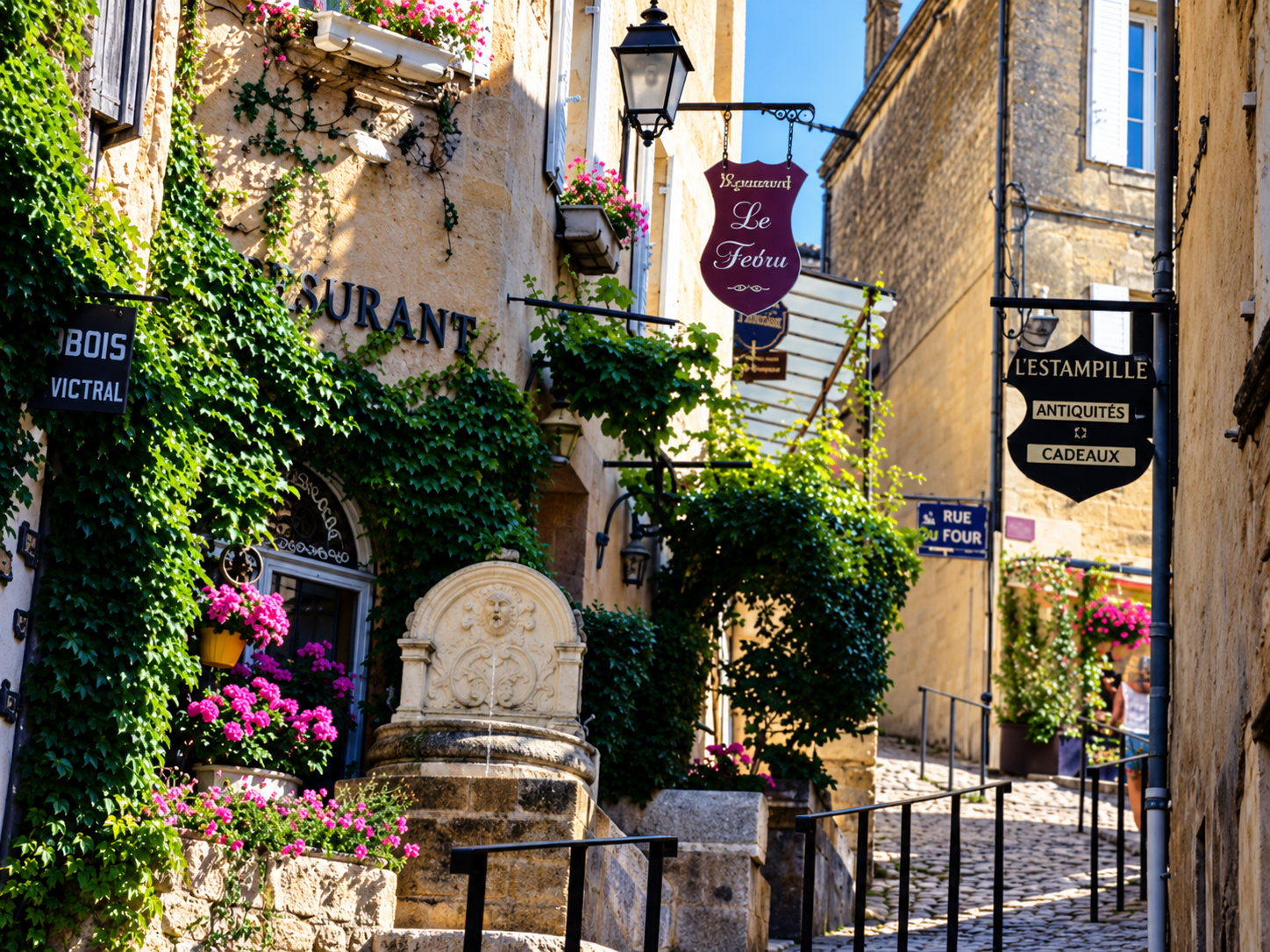
Saint-Émilion, Bordeaux Wine Country | Southwest France
If someone gave you five days, what would the trip look like?
Day One | Saint-Émilion to Lacanau:
Arrive in Bordeaux from Paris and begin with Saint-Émilion. We might have lunch in the village or arrange a château visit before continuing west to Lacanau. Once you reach the coast, the atmosphere changes completely. Settle in and make the first surf session a sunset one, followed by dinner near the ocean, lake or pine forest.
Day Two | Surf + Margaux
Begin with an early session while the waves are good. Then head into the Médoc for tastings at châteaux in Margaux and Saint-Julien, with lunch among the vineyards. Return to Lacanau in the afternoon. If conditions are right, there is time for another surf before dinner.
Day Three | Pauillac + Saint-Estèphe
Start with another morning in the water, particularly if you are working with a coach and building on what you learned during the previous sessions. Then drive north into Pauillac and Saint-Estèphe for a cellar visit and lunch in wine country. By evening, you're back on the Atlantic for sunset.
Day Four | Dune du Pilat + Arcachon
This is a good day to give the surfboard a rest. Head toward the Dune du Pilat for lunch, then walk the dune before continuing into Arcachon Bay. From there, we can arrange a trip aboard a classic wooden boat followed by local wine and fresh oysters at a family-owned oyster cabin. Return to Lacanau in the evening. If the waves are good, you can surf. If not, have a drink with your feet in the sand and watch the sunset.
Day Five | One Last Surf + Bordeaux
Take one final morning session in Lacanau before checking out. Then return to Bordeaux for the Cité du Vin and a final tasting before continuing to Paris or flying from Bordeaux.
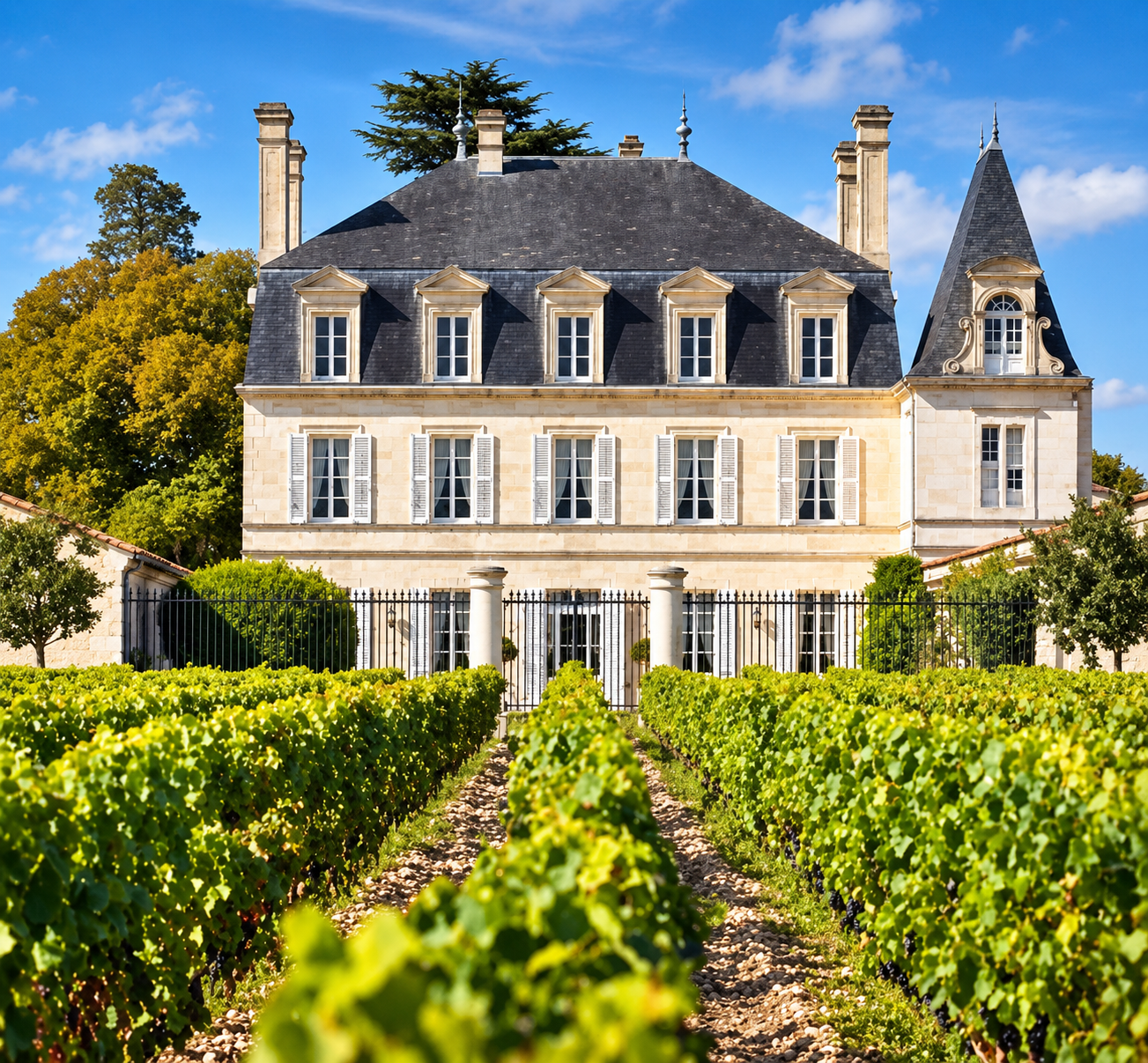
The Médoc & Its Châteaux | Bordeaux Wine Country, Southwest France
What can you arrange for travelers who want to experience the coast this way?
Pretty much everything on the ground. Boards, wetsuits, transportation, lessons or more advanced coaching, accommodation, restaurants, wine experiences, food tours, photography and video can all be arranged. But what matters most is the ability to adapt. Surf conditions change. Weather changes. If the waves are particularly good one morning, you shouldn't have to leave the water because an itinerary written months earlier says you have to be somewhere else. And if the ocean isn't cooperating, we already know what else is happening locally and can change the day. That flexibility is difficult to replicate by simply renting a car, Googling surf spots and making a series of separate reservations.
What do you hope travelers take away from this part of France?
That surfing can be the thread that leads you into the region without needing to dominate the entire trip. You have the Atlantic, Bordeaux wine country, oyster farms, pine forests, enormous dunes and Basque culture all within relatively easy reach of one another. It can absolutely be a surf trip. But it can also be a completely different way of experiencing France.
Need to know
Leave the surf days flexible.
The Atlantic doesn't follow an itinerary. Build enough room into the day to respond to conditions. An unexpectedly good morning on the water may mean moving lunch later. A quiet surf day might become an afternoon in Margaux or oysters on Arcachon Bay.
Knowing when to change the plan is part of the experience.
Plan the Journey
Interested in experiencing France's Atlantic coast with Aurelien, whether you're an experienced surfer, a beginner or traveling with someone who would rather spend the morning among the vineyards?