
We went to Oaxaca for Día de los Muertos and the ruins. Mezcal was not part of the plan.
My husband and I have spent considerable time in Mexico and have always loved tequila. Mezcal was different. The bottles we had tried at home never quite won us over. There was smoke, certainly, but little that made us want to understand what was behind it.
Then came Oaxaca.
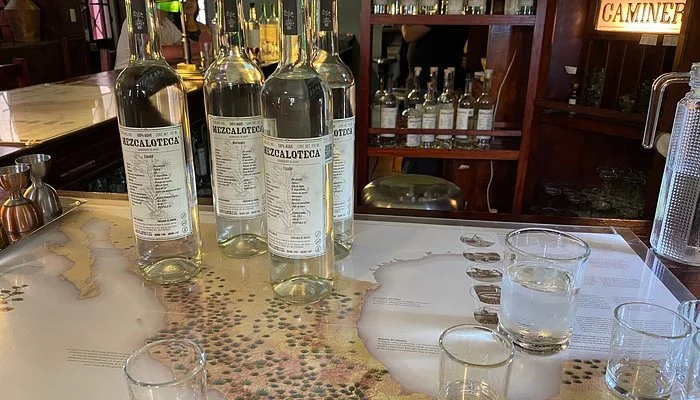
A guided tasting at Mezcaloteca in Oaxaca City,.
The First Glass
Our introduction began at Mezcaloteca, a small tasting room in Oaxaca City devoted to traditional mezcal. This isn't the place for a mezcal margarita. Tastings compare three to five traditional mezcals while exploring agave varieties, regions, production methods, aromas and flavors.
That distinction matters.
Mezcal is not one flavor profile, nor is smoke its defining characteristic. Agave variety, where it grows and the decisions made by the mezcalero can produce spirits that are earthy, herbaceous, mineral, floral or unexpectedly delicate.
Our curiosity had officially been piqued.
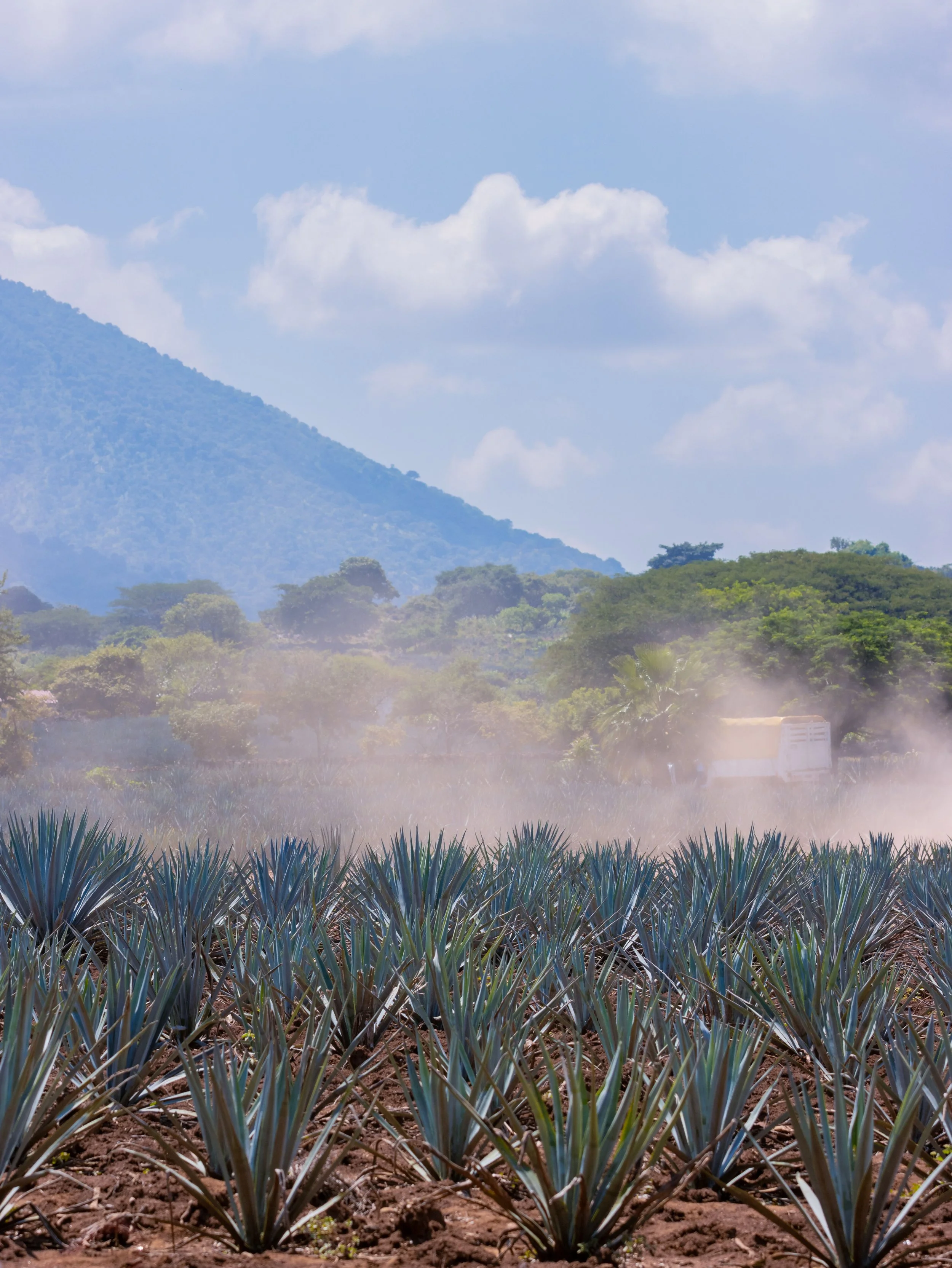
Agave fields stretch across the Oaxacan landscape, where plants mature for years before being harvested for mezcal production.
Into the Agave Fields
To understand mezcal, leave Oaxaca City.
Out in the countryside, agave becomes part of the landscape. At a palenque, the traditional place where mezcal is made, the process unfolds from plant to glass: mature agaves are harvested, their hearts, or piñas, roasted in earthen pits, crushed, fermented and eventually distilled.
Casa Chagoya offers the heritage story. Its family history with agave stretches back five generations, and the house describes its palenque as the oldest on Oaxaca's Mezcal Route. Traditional production here includes earthen-pit roasting and tahona crushing; visitors can also compare ancestral clay-pot and artisanal copper-still production.
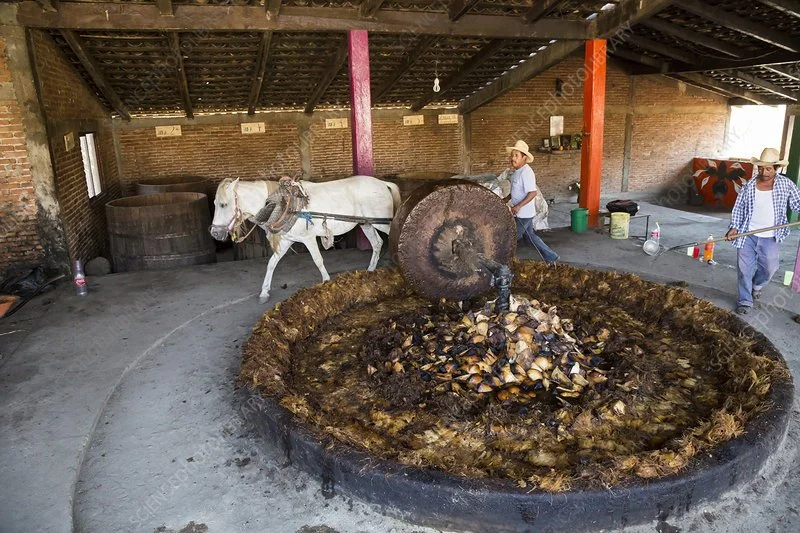
At a traditional palenque, roasted agave is crushed beneath a heavy stone tahona, an essential step before fermentation and distillation.
For a deeper look at where mezcal may be heading, Real Minero in Santa Catarina Minas is particularly compelling. Four generations of family knowledge sit alongside an ethnobotanical garden and Proyecto LAM, an initiative dedicated to rescuing, conserving and propagating agaves from seed. The mezcal is still extraordinarily traditional: agave roasted underground, crushed by hand and distilled in clay pots.
And then there is the pleasure of simply sitting down and tasting it.
Real Minero's experience concludes with four different distillates, and traditional local food can be arranged with advance planning. Suddenly the glass in front of you has a landscape, a plant, a process and a family attached to it.
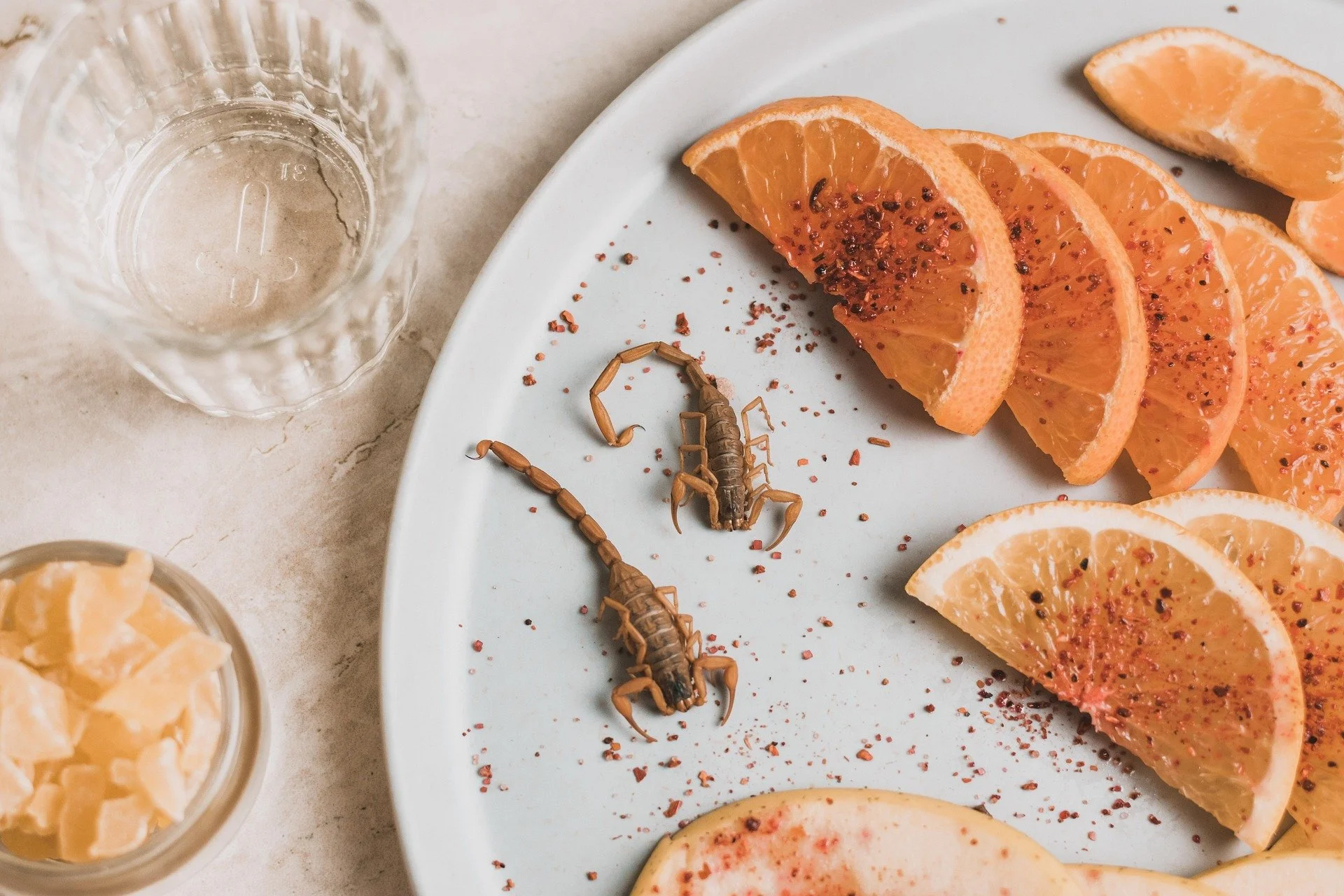
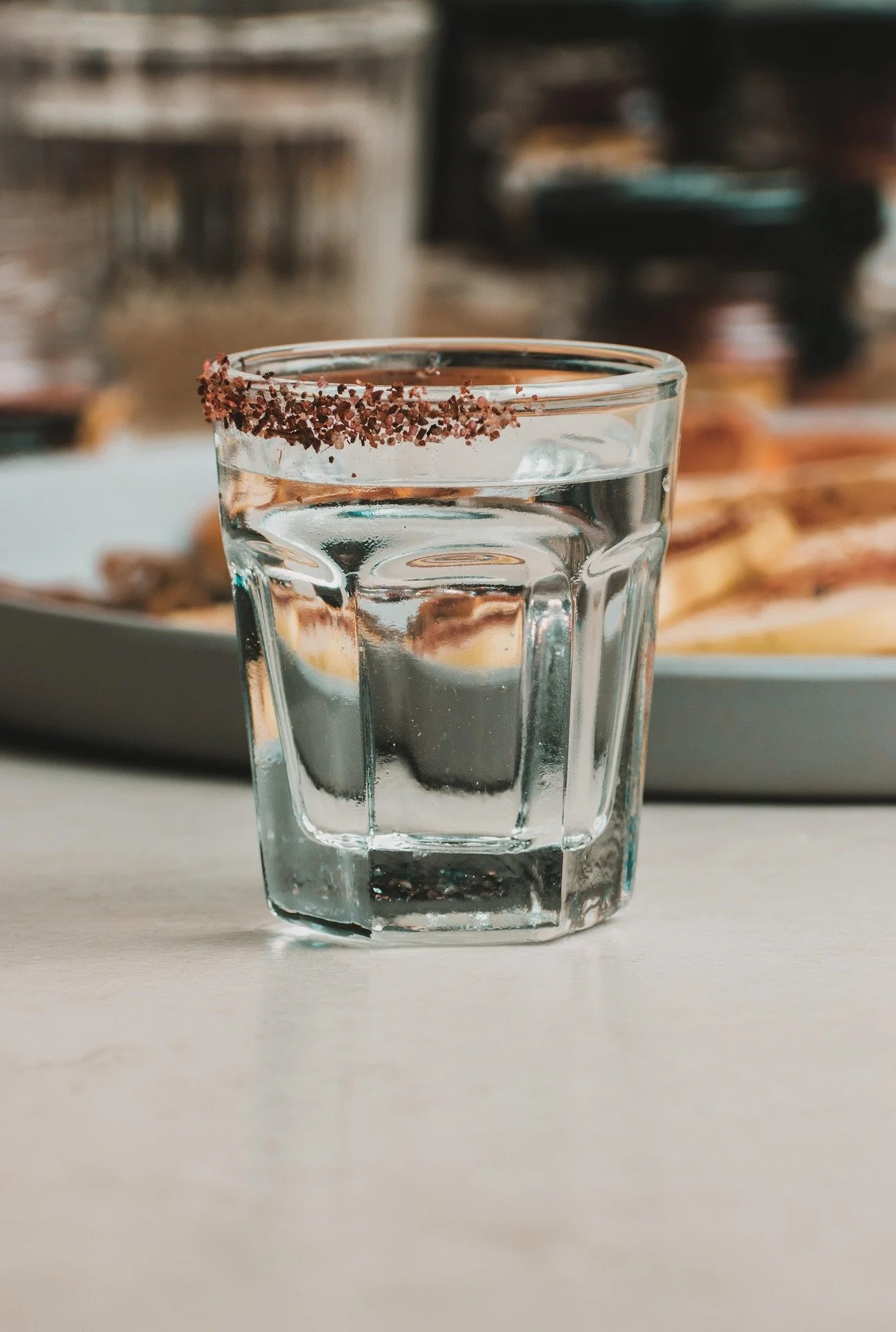
Mezcal served with orange slices, sal de gusano and edible scorpions, a decidedly adventurous accompaniment to a traditional Oaxacan tasting.
Back in Oaxaca
Return to Oaxaca City and mezcal tastes different, not because the spirit has changed, but because you have.
What began as something we weren't particularly interested in became one of the great discoveries of our trip.
Mezcal is now our second-favorite spirit. Second only to Champagne.
Three words. Three categories. And, until Oaxaca, perhaps three distinctions you never thought to question.
Mezcal. Mezcal Artesanal. Mezcal Ancestral.
They reveal something about how the agave was cooked, crushed, fermented and distilled, but the real pleasure is discovering what those words mean in the glass. By the time you leave, a label that once seemed cryptic starts to read like a map.
PLAN YOUR OAXACA JOURNEY
Some trips begin with a destination. Others begin with a bottle.
For Oaxaca, the better version includes both: a considered stay in the city, time in the agave fields, visits to working palenques and enough room in the itinerary for long lunches and unexpected discoveries.
Inquire About Bespoke Oaxaca Planning →
Prefer to travel with the framework already in place?